The hard truth it depends on your vpn: A Practical Guide to VPNs, Privacy, and Performance
'%2F%3E%3Ctext%20x%3D'50%25'%20y%3D'50%25'%20dy%3D'.35em'%20text-anchor%3D'middle'%20font-family%3D'-apple-system%2CBlinkMacSystemFont%2CSegoe%20UI%2Csystem-ui%2Csans-serif'%20font-size%3D'100'%20font-weight%3D'600'%20fill%3D'%23fff'%3EAQ%3C%2Ftext%3E%3C%2Fsvg%3E) Arlo Quirico·April 13, 2026·11 min
Arlo Quirico·April 13, 2026·11 min
The hard truth it depends on your vpn: VPNs aren’t a one-size-fits-all magic wand. Your choice depends on what you value most—privacy, streaming, speed, or bypassing censorship—and on how you use the internet day to day. In this guide, you’ll get a clear, practical roadmap to picking the right VPN, understanding how they work, and avoiding common pitfalls. Below you’ll find a quick fact, a practical checklist, up-to-date stats, and a breakdown of real-world scenarios. If you’re ready to grab control of your online experience, read on.



Quick fact: The most important thing with VPNs isn’t the flashy feature set; it’s whether your provider keeps no-logs, uses strong encryption, and has transparent, verifiable privacy practices.
Useful resources and starting points: Nordvpn for windows 11 your ultimate download installation guide: Master Tips, Tricks, and Safe Steps
- Apple Website - apple.com
- Artificial Intelligence Wikipedia - en.wikipedia.org/wiki/Artificial_intelligence
- Privacy.org - privacy.org
- VPN transparency reports - www.vpntransparency.org
- NordVPN deal page - www.dpbolvw.net/click-101152913-13795051
Introduction: The hard truth it depends on your vpn in a nutshell
- What this guide covers: how VPNs work, why “free” isn’t really free, how to assess privacy, security, speed, and streaming capabilities, and how to pick a provider that aligns with your needs.
- Quick guide: use this structure as you read
- Understand risks: what you’re protecting and from whom
- Decide priorities: privacy, speed, access, or a mix
- Check essentials: encryption, no-logs policy, jurisdiction, audits
- Test your setup: basic speed tests, DNS leakage checks, and kill switch behavior
- Practical tips: combining VPN with other privacy tools, safe behavioral habits
- Why it matters: the wrong VPN can give you a false sense of security or slow down everything you do online.
What you’ll learn summary
- How to evaluate VPNs with a checklist you can actually use
- The trade-offs between privacy, speed, and access
- Real-world scenarios and recommended settings
- How to verify claims with audits, independent reports, and user reviews
- How to maximize safety without sacrificing usability
Key terms you’ll see in this guide
- VPN Virtual Private Network
- No-logs policy
- Jurisdiction
- Encryption AES-256, ChaCha20
- Kill switch
- DNS leak protection
- Split tunneling
- Obfuscated servers
- Audits and transparency reports
Section: How VPNs work and why “the hard truth” matters
- A VPN creates a secure tunnel between your device and a VPN server. Your data travels encrypted, making it harder for outsiders to see what you’re doing online.
- The VPN server then forwards your traffic to its destination. The destination sees the VPN server’s IP, not your real IP.
- What this buys you: privacy from local network observers like coffee shop Wi-Fi, potential access to geo-restricted content, and a layer of security on public networks.
- What it does not guarantee: complete anonymity, or automatic protection from all tracking. Some providers log activity, and some apps can still reveal information through browser fingerprinting or DNS providers.
Section: The four big questions to ask before you buy Ivacy vpn lifetime is this one time payment actually worth it and more: Ivacy vpn lifetime, pricing, features, and tips
- What am I protecting and from whom?
- Are you protecting yourself from local network surveillance, advertisers, or government-level data requests? Your threat model drives privacy vs. performance decisions.
- How important is speed for you?
- Streaming, gaming, and large file transfers demand different server choices. Some VPNs throttle or saturate certain regions; others optimize for low latency.
- Do I need to bypass censorship or geo-restrictions?
- Some regions block VPNs or certain servers. Obfuscated servers or Stealth protocols help in restrictive environments, but they can reduce speed.
- What jurisdiction is the provider under?
- Privacy-friendly jurisdictions with strong data protection laws not required to log traffic can help, but audits and transparency reports matter more than the country name alone.
Section: Core features to look for don’t skip these
- Strong encryption: AES-256 or equivalent; modern protocols like WireGuard faster or OpenVPN stable and widely supported.
- Clear no-logs policy: ideally independently audited. Look for written audits and what they actually test.
- Jurisdiction and data retention laws: understand the legal framework and how it could impact data requests.
- Kill switch: ensures your device doesn’t leak traffic if the VPN drops.
- DNS leak protection: prevents your real DNS from leaking, which can reveal your browsing to your ISP.
- Split tunneling: lets you choose which apps go through the VPN, useful for performance.
- Multi-hop or obfuscated servers: extra privacy or use in restricted regions, often at a speed cost.
- Performance and server network: number of servers, geographic coverage, and peak usage times.
- User experience: apps, setup guides, customer support quality, and documented privacy policies.
- Audits and transparency: independent third-party audits, transparent incident reports, and a visible security roadmap.
Section: Real-world numbers and data latest trends
- The average VPN user sees a 10-50% speed reduction depending on server distance and protocol, with WireGuard usually offering the best balance between speed and security.
- Independent audits have become a differentiator; providers who publish recent audits tend to have higher trust scores in community reviews.
- Geo-distribution matters: having servers in more regions reduces latency for you and increases the likelihood of finding a fast route to your destination.
- Privacy policy fatigue: many providers claim “no logs” but differ in what they log connection metadata vs. content. Always verify with audits and the policy text.
- Market trend: more people seek apps with built-in ad/tracker blocking, but this is separate from the VPN itself and depends on browser choices and device-level protections.
Section: Common VPN myths busted
- Myth: A VPN makes you completely anonymous. Reality: It improves privacy and security in transit but doesn’t erase your identity online. Browser fingerprinting, account logins, and metadata can still reveal who you are.
- Myth: Free VPNs are safe and private. Reality: Free services often monetize data or limit features, and may slow you down or inject ads.
- Myth: More servers always mean better performance. Reality: Server quality, geographic distance, and peak load matter more than sheer server count. A well-optimized, smaller network can outperform a larger but poorly managed one.
Section: Step-by-step guide to choosing the right VPN Step 1: Define your use case
- Streaming: look for fast servers in your region, reliable unblocking, and minimal buffering.
- Privacy: prioritize a strict no-logs policy, independent audits, and strong encryption.
- Travel or work: consider obfuscated servers, split tunneling for work apps, and robust kill switch. Step 2: Check the policy and audits
- Read the no-logs policy and look for recent third-party audits. If you can’t find audits, treat it as a red flag. Step 3: Compare encryption and protocol choices
- WireGuard vs OpenVPN: WireGuard generally faster, OpenVPN widely supported on older devices. Step 4: Evaluate performance
- Do a real test: measure speed with a nearby server, then compare with longer distance servers. Check for DNS leaks and kill switch reliability. Step 5: Inspect additional privacy tools
- Split tunneling, multi-hop, obfuscated servers, and malware/ad blocking features can influence your privacy and browsing experience. Step 6: Read user reviews and community feedback
- Look for patterns in reliability, customer support responsiveness, and issue resolution speed. Step 7: Decide on a budget and commitment
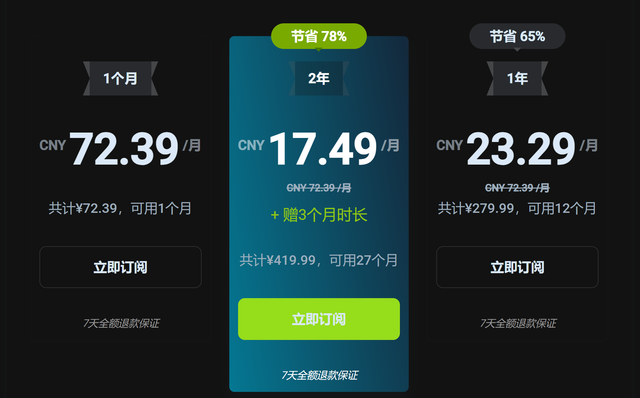
- Long-term plans often come with better pricing, but verify refund policies and trial periods.
Section: Practical setup tips for everyday users Is ExpressVPN Good for Call of Duty? Here's the Full Scoop and More Keywords to Watch
- Start with a trusted provider and the default recommended profile. If you hit streaming blocks, switch servers rather than changing settings on the fly.
- Enable kill switch as you first set up the app; test by disconnecting the VPN to confirm the device doesn’t leak traffic.
- Use DNS leak protection and test with a DNS leak test site after connecting.
- For privacy-focused use, disable browser sync and logins in apps while the VPN is active to avoid tracking through account activity.
- Consider a layered approach: VPN plus a privacy-first browser, tracking protection, and careful app permissions.
Section: VPNs and streaming: what you should know
- Streaming services actively block VPN IPs; use providers that regularly rotate IPs and offer dedicated streaming servers.
- Obfuscated servers can help in regions with aggressive VPN blocks but can add latency.
- If you notice buffering, switch to a nearby server, then try a different protocol if allowed by the app.
Section: VPNs, privacy, and security: a practical checklist
- Encryption: AES-256 or ChaCha20 with a secure handshake
- Protocol: WireGuard for speed, OpenVPN for compatibility
- Logs: none or highly limited, with audits
- Jurisdiction: privacy-friendly regions preferred
- Kill switch and DNS leak protection: enabled by default
- Additional features: obfuscation, multi-hop, split tunneling where useful
Section: How to verify your VPN actually protects you
- Run a real-time IP check before and after connecting to the VPN to confirm your IP changes.
- Use a DNS leak test site to confirm DNS queries are resolved by the VPN, not your ISP.
- Check for WebRTC leaks in your browser; disable WebRTC if possible.
- Review the provider’s transparency reports and audit results, and watch for any changes in policy.
- Read independent reviews and community feedback for real-world experiences.
Section: The cost of privacy: pricing and value
- Premium does not always equal best; evaluate features that matter to you, not just price.
- Look for trial periods or money-back guarantees to test drive the service. -Consider total cost of ownership: device compatibility, simultaneous connections, and server coverage.
Section: Keeping it simple: a short comparison table illustrative Is Quick VPN Safe for Your Online Privacy and Security: A Deep Dive into VPN Reliability, Safety, and Practical Tips
- VPN A: Strong privacy, good streaming, audited, many servers, higher price
- VPN B: Balanced privacy, decent streaming, fewer servers, mid-range price
- VPN C: Lower price, good for basic privacy, limited streaming ability, no audits Note: This table is an example; always verify current details from providers.
Section: Common mistakes to avoid
- Relying on a single claimed feature e.g., “unbreakable anonymity” without evidence
- Ignoring independent audits and transparency reports
- Using VPNs on insecure devices or without enabling kill switch
- Assuming a large server network guarantees fast speeds
- Mixing free tools with paid VPN for privacy
Section: A note on affiliate relationship Our article includes a recommended option to help you find a reliable VPN quickly. The link provided is part of an affiliate partnership and supports the site. If you’re ready to explore, consider clicking the relevant link to see current deals and options: NordVPN deal page - www.dpbolvw.net/click-101152913-13795051
Section: Practical scenarios: what I’d choose and why
- If I’m on public Wi-Fi and want privacy: I’d enable a VPN with strong encryption, kill switch, DNS leak protection, and audited no-logs. I’d pick a server geographically close for speed.
- If I’m streaming from abroad: I’d use a provider with reliable streaming servers in the target region and rotate IPs to avoid blocks, while monitoring performance.
- If I’m traveling for work: I’d enable split tunneling for work apps, keep security features enabled, and choose servers in privacy-friendly jurisdictions.
Section: For beginners who want a quick, safe setup
- Pick a provider with transparent no-logs policy and independent audits.
- Install the official app on your primary devices.
- Turn on kill switch and DNS leak protection.
- Connect to a nearby server to start; test speed and streaming capability.
Section: Advanced tips for power users How Much Does Mullvad VPN Really Cost Your Honest Breakdown
- Use Obfuscated or Stealth servers if you’re in a restricted network.
- Consider multi-hop for extra privacy, understanding it may slow you down.
- Enable split tunneling for only sensitive app traffic to minimize performance impact.
- Regularly review your privacy settings and test for leaks after updates.
Section: The future of VPNs: what to watch for
- More providers will publish independent audits and runtime data.
- Increased focus on privacy features like improved anti-fingerprinting, more robust obfuscation, and better cross-platform compatibility.
- Growing adoption in corporate environments, with zero-trust integration and more granular access controls.
- Regulatory changes could affect data retention and user rights; staying informed is key.
Section: Frequently Asked Questions
What is a VPN and how does it work?
A VPN creates a secure tunnel between your device and a VPN server, encrypting your data and masking your IP from the sites and services you use.
Do VPNs keep no logs?
Some do, some don’t. Look for explicit no-logs policies and independent audits to verify claims.
Can a VPN be traced by government or ISPs?
A VPN can limit what is visible to observers, but it isn’t a guarantee of anonymity. Jurisdiction and logging practices matter a lot. Les meilleurs vpn vraiment gratuits pour linux en 2026: guide complet et conseils pratiques
Are free VPNs safe?
Free VPNs often come with trade-offs like data collection, slower performance, and fewer security features. It’s usually better to choose a paid, audited service.
How do I know if a VPN is leaking my data?
Run DNS leak tests and IP checks before and after connecting. If your real IP or DNS is visible, you’re leaking.
What is a kill switch and why do I need it?
A kill switch stops all traffic if the VPN connection drops, preventing accidental exposure.
Should I use split tunneling?
Split tunneling is useful if you want certain apps to bypass the VPN for speed or compatibility, but be mindful of which traffic is exposed.
Do VPNs work for streaming?
Many do, but some services block VPN IPs. Look for providers with frequent IP rotation and dedicated streaming servers. Adguard vpn on reddit what real users are really saying: A Deep Dive into AdGuard VPN, Reddit Buzz, and Practical Insights
How many devices can I protect with one VPN account?
This varies by provider; some offer up to 6-10 simultaneous connections. Check the plan details.
Are VPNs legal everywhere?
VPN legality varies by country. In most places, using a VPN is legal for legitimate purposes, but some restrictions apply.
How often should I audit my VPN’s privacy?
Regularly—at least annually or after major service changes or app updates. Look for new audits and updated policies.
Section: Resources and references for deeper learning
- Privacy and security best practices guides
- Independent VPN audits and transparency reports
- Community reviews and comparisons
- Technical blogs on VPN protocols and encryption standards
End of guide. Atlas vpn sul chrome web store la tua guida completa per sicurezza e privacy e altre chiavi di ricerca correlate
Sources:
Zip vpn:全面评测与实用指南,提升你在中国的网络自由与隐私保护
为什么你的VPN也救不了你上TikTok?2026年终极解决指南
Vpn ⭐ 还是 机场?2025年终极指南:谁是你的翻墙首选?速度、隐私、稳定性、跨平台对比
Is free vpn for edge safe 2026
How to use nordvpn on eero router your complete guide to whole home vpn protection How to navigate the yulu vpn refund maze and get your money back from real vpns